It’s never been an easy life. Up at 4:30 for the first milking, finish up around 8 at night. You make a living, but not much of one, which is why the average age of dairy farmers keeps creeping up into the 50s and 60s. The big payday is when you get out of it and sell your land.
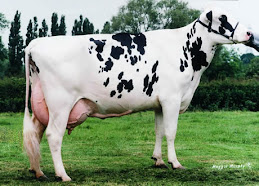
“It’s a profession that if you weren’t born into it, no one would do it,” said Donald Hosking, who with his wife, Joanne, raises 100 Holsteins on 81 lovely rolling acres in Delaware County at the far reaches of the Catskills. “We just don’t know any better.”
So back when they started dairy farming on Roses Brook Road 22 years ago, there were seven other dairy farms on the road. Now one other is still hanging on, and the rest have been sold to lawyers, architects, commodity brokers from the city and suburbs. In 1998, there were 8,700 dairy farmers in New York. Now there are 5,700.
For all the vagaries of markets and weather and balky cows, there used to be a hazy ostensible logic to the business. Now it’s a global market complicated by commodities traders, the balance between imports and exports, the needs of agri-conglomerates, and the role played by strange new players like the imported milk protein concentrates, or M.P.C.’s, which some say are distorting the market with unregulated and potentially unsafe milk substitutes used in cheeses and dips.
But the bottom line seems to be that the global recession slammed the brakes on demand — fewer restaurant visits, less ice cream, less cheese — at a time of peak supply. Two years ago, Mr. Hosking was making about $20 per 100 pounds of milk. Now he’s making about $10.85. Meanwhile his costs — grain, fuel, high-protein feed — have gone up about 50 percent. Last year he took out about $40,000 from savings to keep going. This year it will be about $50,000. Farmers who have tapped out their equity — a growing number — could be gone in months.
“It’s 1973 prices and 2009 costs,” he said. “It still costs X number of dollars to run the farm, no matter what you’re bringing in. Detroit can shut down when their lots are full. We still have to feed and milk our cows every day.”
Dave Rama, who has a cattle auction business in Delhi, said everyone was in the same boat, with the cost of producing milk exceeding its price.
“I am learning more about bankruptcy than I ever intended to learn,” Mr. Rama said.
He drives from Mr. Hosking’s farm to Unadilla, the hills impossibly green from all the rain, grain silos poking into the blue sky. There he meets two of the younger farmers, Luke and Derek Johnson, 32 and 24, Cornell ag achool grads taking over their family farm. There are 300 cows and beehives and fields of corn, the bounty of American agriculture everywhere you turn.
LUKE JOHNSON says he’s always been an optimist, and he figures this will work out, too. He’s lucky to have a highly regarded farm operation, though he worries about his neighbors and already has $300,000 in debt against $500,000 in equity in cows and machinery. Still, he says: “It’s hard to see good farmers desperate. I was just in California at the national Holstein convention, and all the delegates there had desperate looks on their faces, as if they didn’t know what was going to happen next.”
HOBART, N.Y. – It all seems far away. We don’t see where our food comes from, and who could pay attention anyway, what with the endless cavalcade of amusements that’s the summer news — the randy governors and senators, Jon and Kate, poor, put-upon Sarah Palin, the farewell to M.J.? But maybe that’s the idea. In the real world around the corner and in distant places like Hobart and Delhi and Unadilla it’s not getting better and it’s not getting clearer, so bring on the freak shows, the more the merrier.
Mike Van Amburgh is an animal science professor at Cornell who grew up on an Ohio dairy farm. “I’m almost 50 years old, and in my lifetime it’s never been this bad,” he said. “Everyone’s in the red.”
For the dairy farmers, he said, absent a sudden worldwide boom pumping up demand, the most likely result is a historic washout of dairy farmers — some say 10 percent, 20 percent or more around the end of the year — that would reduce supply, raise prices and reset the bar.
Which kind of dairymen, he was asked, are in the biggest trouble?
“Everybody,” he replied.
Showing posts with label price. Show all posts
Showing posts with label price. Show all posts
Friday, July 10, 2009

Friday, September 12, 2008
Dairy market gloom
Lakeland Dairies yesterday (Wednesday) cut their August milk price by 2 cent per litre and there are fears that other processors are set to follow the same downward trend. The move follows last Friday's €100 per tonne cuts in the Irish Dairy Board (IDB) butter and skim prices.
Meanwhile, it was confirmed this week that profits for 2008 at the IDB will be sharply down on previous years and the traditional bonus payment to processors is now in serious doubt.
The IDB paid a bonus of €6m to milk processors for 2007, while the 2006 bonus was €11m. Conor Ryan, chief executive of Arrabawn co-op, said he would continue to push the case for a bonus payment from the IDB as it was an important contribution for co-ops trading heavily with the board.
Arrabawn are due to set their August price today.
IDB chief executive Noel Coakley warned that a combination of poorer market returns, higher financing costs and exchange rates will have 'a serious impact' on the IDB's performance in the current year.
Furthermore, consumer reaction to 2007's higher prices has adversely affected returns, with sales of Kerrygold butter in the crucial German market down 12% on previous year levels. This has traditionally been one of the IDB's main profit centres.
Noel Coakley explained that the IDB's financial performance was severely affected in the first half by the carry-over of expensive product purchased in 2007. This was sold into depressed markets at a substantial loss.
The IDB has now changed its procurement policy to avoid a repeat occurrence.
The timing of the announcement will inevitably be seen as preparing farmers for a milk price cut.
However, Coakley said: "it is important that all dairy industry participants are aware of the market realities''. He added: "Market conditions across all products have weakened considerably from the extraordinary heights of 2007.''
From their 2007 peak, he said that official quoted price for butter is down 39%; skim milk powder 45% and whole milk powder 35%.
Irish dairy farmers can only hope that the recent strengthening of the dollar and slowdown in US production growth may help our position.
Meanwhile, it was confirmed this week that profits for 2008 at the IDB will be sharply down on previous years and the traditional bonus payment to processors is now in serious doubt.
The IDB paid a bonus of €6m to milk processors for 2007, while the 2006 bonus was €11m. Conor Ryan, chief executive of Arrabawn co-op, said he would continue to push the case for a bonus payment from the IDB as it was an important contribution for co-ops trading heavily with the board.
Arrabawn are due to set their August price today.
IDB chief executive Noel Coakley warned that a combination of poorer market returns, higher financing costs and exchange rates will have 'a serious impact' on the IDB's performance in the current year.
Furthermore, consumer reaction to 2007's higher prices has adversely affected returns, with sales of Kerrygold butter in the crucial German market down 12% on previous year levels. This has traditionally been one of the IDB's main profit centres.
Noel Coakley explained that the IDB's financial performance was severely affected in the first half by the carry-over of expensive product purchased in 2007. This was sold into depressed markets at a substantial loss.
The IDB has now changed its procurement policy to avoid a repeat occurrence.
The timing of the announcement will inevitably be seen as preparing farmers for a milk price cut.
However, Coakley said: "it is important that all dairy industry participants are aware of the market realities''. He added: "Market conditions across all products have weakened considerably from the extraordinary heights of 2007.''
From their 2007 peak, he said that official quoted price for butter is down 39%; skim milk powder 45% and whole milk powder 35%.
Irish dairy farmers can only hope that the recent strengthening of the dollar and slowdown in US production growth may help our position.
Thursday, July 24, 2008
Threat to NI dairy calf prices - Exports could be cut off due to TB problem
The recent discovery in Holland of 12 calves, imported from the UK, infected with TB could have serious consequences for dairy farmers in Northern Ireland. There is a real possibility that export of calves from NI to the Netherlands and Belgium could be stopped.
There has been no ban on the import of calves from the UK into Holland, but the SKV, the Dutch equivalent of Bord Bia, will not certify UK sourced calves for consumption.
This follows the case in which calves were exported from a farm in England, which later tested positive for TB.
The exported calves were under 42 days old and did not have to be tested before export. After the home farm in England tested positive, the calves were traced in Holland and 12 were found to have TB.
Dutch importers are now looking to source calves from other EU states. Meanwhile as the Farmers Journal went to press, the EU standing committee on the food chain and animal health (SCoFCAH) were meeting in Brussels to consider a Dutch proposal on banning exports of calves from the UK.
There has been no ban on the import of calves from the UK into Holland, but the SKV, the Dutch equivalent of Bord Bia, will not certify UK sourced calves for consumption.
This follows the case in which calves were exported from a farm in England, which later tested positive for TB.
The exported calves were under 42 days old and did not have to be tested before export. After the home farm in England tested positive, the calves were traced in Holland and 12 were found to have TB.
Dutch importers are now looking to source calves from other EU states. Meanwhile as the Farmers Journal went to press, the EU standing committee on the food chain and animal health (SCoFCAH) were meeting in Brussels to consider a Dutch proposal on banning exports of calves from the UK.
Subscribe to:
Posts (Atom)